Ros ceremony: why Goan Catholics pour coconut milk on the couple
What is the ros, or roce, at a Goan Catholic wedding? Why families pour coconut milk on the bride and groom, the zoti songs, and how to invite guests.
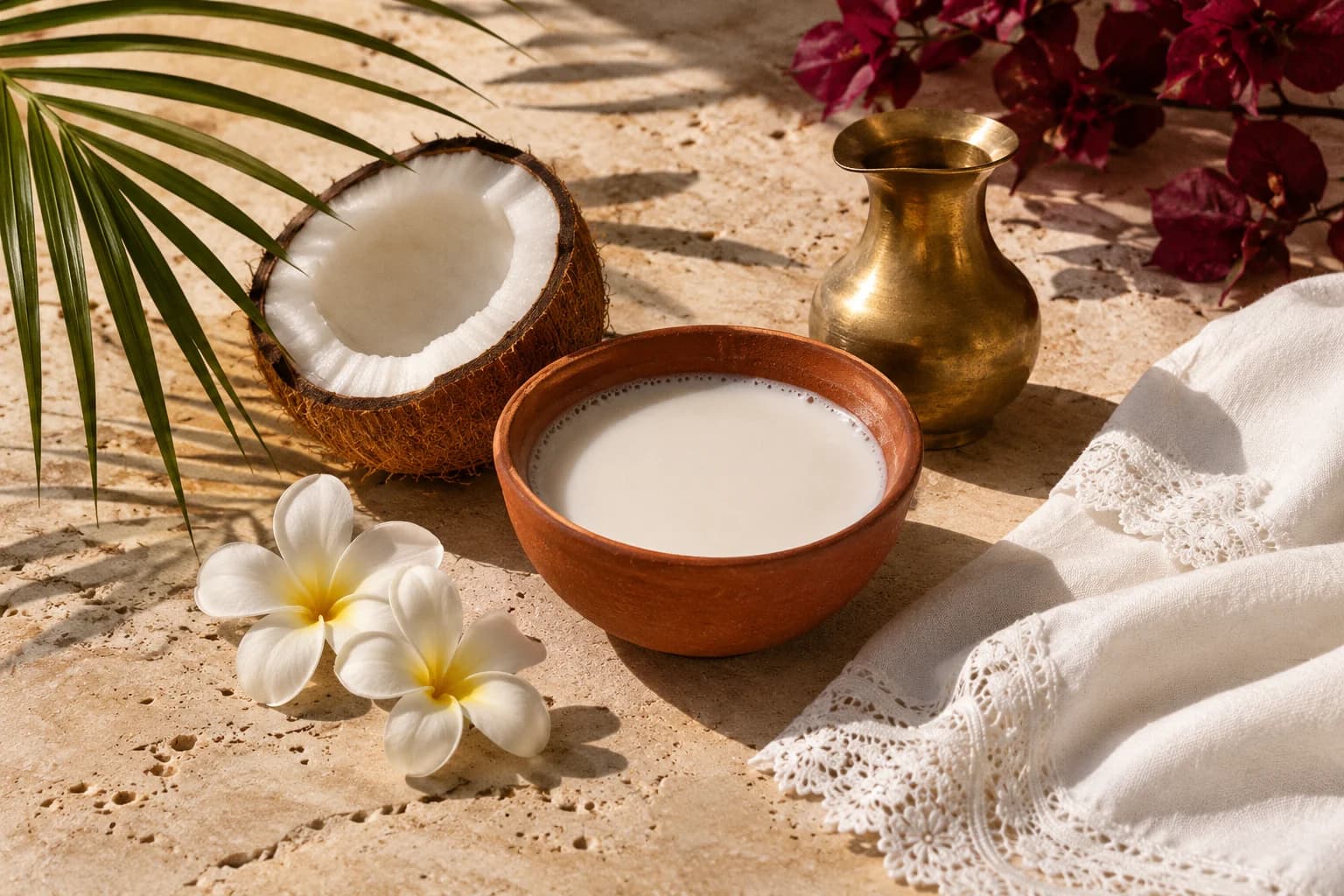
A day or two before a Goan Catholic wedding, the bride sits in her family home in an old dress she does not mind ruining. Her mother traces a cross on her forehead, and then, one by one, everyone who loves her pours coconut milk over her head. Across town, the groom’s family is doing the same to him. It is the ros, and it usually ends with the cousins soaked too.
What is the ros?
The ros, also spelled roce, is a pre-wedding custom of Goan Catholic families, held a day or two before the church wedding. It happens at home, separately at the bride’s house and at the groom’s, with family, neighbours and close friends. It is a family custom rather than a sacrament: the marriage itself is celebrated in church.
The prayer and the pouring
The ros begins with a prayer. The mother or the eldest of the family makes the sign of the cross on the bride’s or groom’s forehead with coconut oil. Then parents, elders and friends take turns to pour fresh coconut milk over their head, one by one, each with a blessing of their own.
- A prayer, led by the family
- A cross on the forehead with coconut oil, by the mother or the eldest
- Coconut milk poured by parents, elders and friends, one by one
- Zoti sung by the women of the family
- A bath, then music and a feast
The zoti
While the coconut milk flows, the women of the family sing zoti, old Konkani wedding songs passed down through the generations. Then the bride or groom bathes, changes, and the evening turns into music, dancing and food.
Why Goan Catholics do it
The ros is a blessing from the family, and a goodbye to single life before the church wedding. It is a Konkani custom older than Portuguese rule, which Goa’s Catholic families have kept alongside the church wedding.
Goan Catholic families use coconut milk. Mangalorean Catholic families hold a roce of their own, with their own songs, the vovio, and Goan Hindu families have their own pre-wedding customs.
Thoda sa ros. Bahut saara pyaar. A little coconut milk, a lot of love.
The ros on your invitation
The ros deserves its own line, with its own date, time and the address of the family home, since it is somewhere different from the church and the reception. Add a friendly warning to wear something that can get splashed. If the bride’s and groom’s ros are on the same evening, send each side’s guests the details for theirs. Guests can then reply separately for the ros, the church service and the reception.
Christian wedding invitations: wording, customs and templates
Minnu and manthrakodi: why a Kerala Christian groom ties a minnu
Haldi ceremony meaning: why turmeric comes before the wedding
Quick answers
- What is the ros in a Goan wedding? A pre-wedding blessing at home, where family and friends pour coconut milk over the bride or groom.
- Is it ros or roce? Both. They are two spellings of the same custom.
- When is the ros held? A day or two before the church wedding, separately at the bride’s and the groom’s homes.
- What songs are sung at the ros? Zoti, old Konkani wedding songs sung by the women of the family.
Written by Inviteeq Editorial, with care for every celebration.