Parsi lagan: the curtain, the thread and the rice fight
Why do Parsi couples throw rice at each other at their wedding? The white cloth, the seven rounds of cotton thread, the rice race and what the old books say about who wins.
Most weddings save the laughter for the reception. A Parsi lagan builds it into the ceremony. The couple sit face to face without being able to see each other, two priests pray, a thread goes round and round them, and then, the moment the cloth between them drops, the bride and groom start pelting each other with rice.
What is a Parsi lagan?
Lagan is what Parsis, the Zoroastrians of India, call their wedding. The ceremony is led by two priests, often in the evening, with the couple seated on two chairs on a stage while the families gather round. Like many Parsi customs, it mixes ancient Zoroastrian prayers with traditions picked up in Gujarat over centuries.
The white cloth between them
The couple first sit facing each other, but a white cloth is held up between them, so they cannot see each other at all. It is a custom Parsis took on in Gujarat rather than something from scripture, and it builds a little suspense into the opening of the ceremony.
Seven rounds of thread
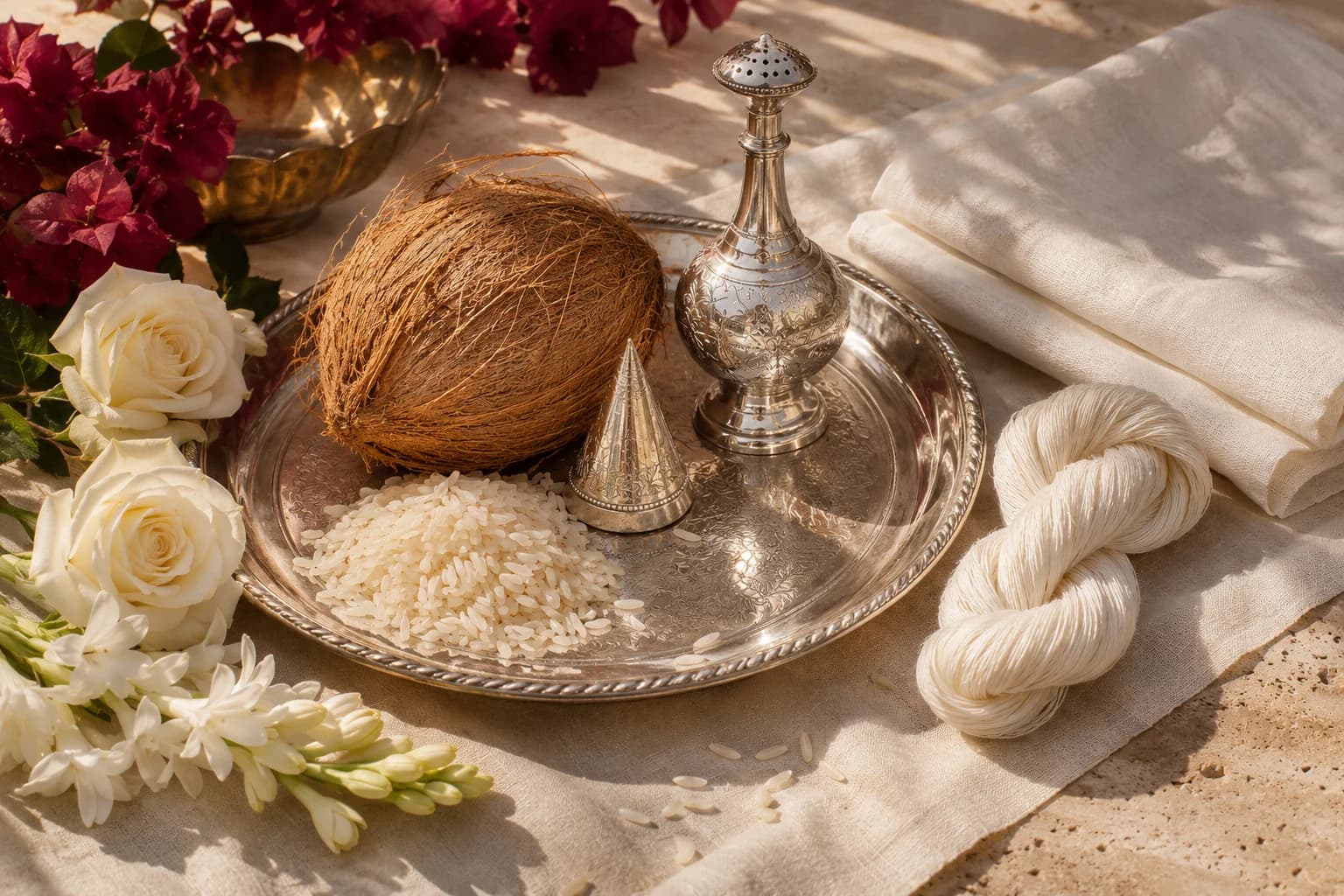
Under the cloth, their right hands are joined. A twist of raw cotton thread is then passed around the couple seven times while the priests pray, and wound around their joined hands as well.
The meaning is easy to see. One thread snaps with almost no effort; many threads twisted together are hard to break. The rounds are meant to bind the couple the same way: separately breakable, together strong.
Ek dhaaga aasaani se toot jaata hai. Many threads, twisted together, don’t break.
The rice fight
Then the cloth drops, and the bride and groom each grab a handful of rice and throw it at the other, as quickly as they can, while everyone cheers. Families differ on the exact order of the cloth and the rice, but the race is always the moment guests remember.
The popular joke says that whoever throws first will be the boss of the marriage. The old accounts of Parsi customs read it differently: it is a race of love, and the winner is the one who shows their love and respect for the other first.
Pehle parda. Phir dhaaga. Phir chawal, aur bahut saari hasi. First the curtain, then the thread, then rice and lots of laughter.
The blessing that follows
Once the rice has settled, the couple sit side by side and the priests recite the blessings of the marriage, often sprinkling rice over them as they go, before the families come up to congratulate them and the dinner begins.
A lagan on your invitation
Give the lagan its time, and the time dinner is served, since many guests plan their evening around the meal. If there are functions in the days before, give each its own line with its own venue and time, so guests can reply for each one and you know who to expect where.
Find the right words for your invitation
Quick answers
- Why do Parsi couples throw rice at each other? It is a playful race at the heart of the lagan. The old accounts call it a race of love, won by whoever shows love first.
- Why is a cloth held between the couple? So they cannot see each other until it drops. It is a custom Parsis adopted in Gujarat.
- Why is a thread wound around the couple seven times? To bind them together: one thread breaks easily, many twisted together do not.
- Who conducts a Parsi wedding? Two priests, who recite the prayers and blessings together.
Written by Inviteeq Editorial, with care for every celebration.