Joota chupai: why the bride’s sisters steal the groom’s shoes
Why do the bride’s sisters hide the groom’s shoes? How joota chupai works, the bargaining for the shagun, why many say it began as an icebreaker, and how to play it well.
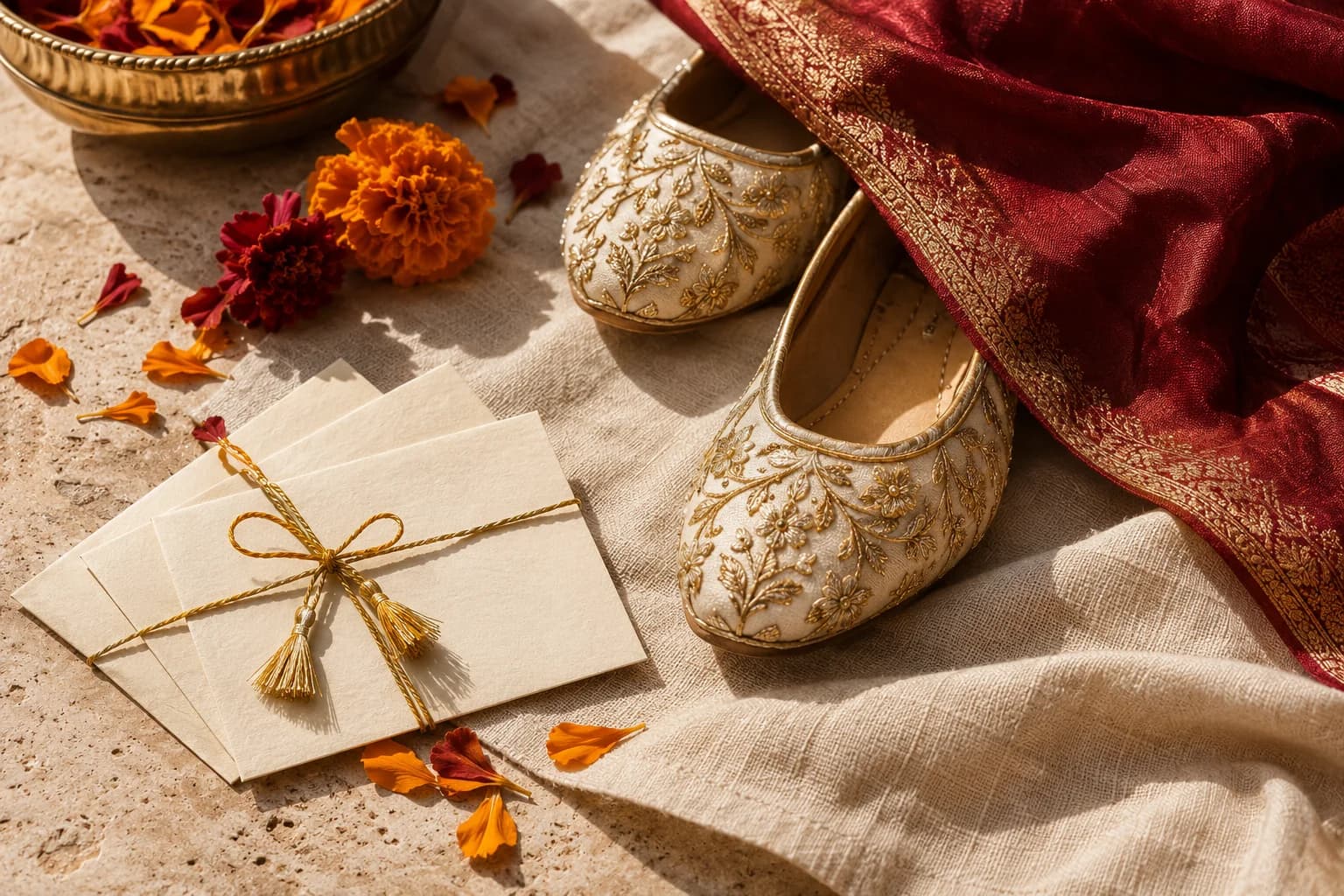
Every North Indian wedding has a subplot running under the pheras. While the pandit chants, the bride’s sisters and cousins are on a mission, the groom’s friends are on guard, and the target is a pair of embroidered shoes left at the edge of the mandap. Joota chupai is the most fun anyone has at a wedding without dancing.
What is joota chupai?
Joota chupai, also written juta chupai, means hiding the shoes. Before the groom steps onto the mandap, he takes off his shoes, as anyone would before a sacred space. The moment he does, the bride’s sisters, the saaliyan, and her cousins try to grab them and hide them somewhere he will not find them.
The heist
The groom’s friends and brothers know it is coming, so they guard the shoes, hide them in a bag or pass them around. The bride’s side plots, distracts and waits. For a few hours the whole wedding turns into a heist, with aunties tipping off one side and children running messages for the other.
The deal: shagun do, joote lo
After the pheras, when the groom wants his shoes back, the negotiation begins. The sisters name a price for their return, a shagun of cash or gifts, and it is always far more than he plans to pay. He bargains, his friends heckle, the elders take sides, and eventually a deal is struck and the shoes come out.
Shagun do, joote lo. And the bargaining? Full Sarojini Nagar.
Why families do it
Many say joota chupai began as an icebreaker. In arranged marriages, two families who had barely met spent the wedding being formal and careful with each other. A game between the bride’s sisters and the groom’s friends gave them a reason to tease, argue and finally laugh together. It is a widely repeated explanation rather than recorded history, but it is exactly what the game still does.
Joota chupai isn’t about the shoes. Yeh dono families ki pehli dosti hai. It’s the two families’ first friendship.
How to play it well
- Agree a rough range for the shagun among the elders beforehand, so nobody feels cornered on the night
- Hide the shoes somewhere safe and clean, and keep track of who has them
- Keep it light: it is a game for the groom’s side to lose gracefully, not a test
- Return the shoes before the vidaai, whatever the state of the negotiation
Joota chupai on your invitation
Joota chupai never needs a line of its own. It happens during the wedding ceremony, so list the wedding with the time guests should arrive and mention the pheras if guests will want to be seated for them. Where the shoes are hidden stays a secret; the venue, the time and the map should not.
Hindu wedding invitations: wording, functions and templates
Varmala ceremony meaning: why everyone tries to lift the groom
Quick answers
- Who steals the groom’s shoes? The bride’s sisters and cousins, while the groom’s friends try to guard them.
- When does joota chupai happen? The shoes are taken when the groom steps onto the mandap, and the deal is usually struck after the pheras.
- How much shagun should the groom give? Whatever the families are comfortable with. Many agree a range quietly beforehand.
- Why do families play joota chupai? For fun, and many say to break the ice between two families who have just met.
Written by Inviteeq Editorial, with care for every celebration.