Shubho drishti: why a Bengali bride hides her face behind betel leaves
Why does a Bengali bride cover her face with betel leaves? The saat paak, the shubho drishti or first look, the conch and ulu, and mala badal, explained.
At a Bengali wedding, the bride arrives at the mandap without walking. Her brothers carry her in, seated on a low wooden plank, and she holds two betel leaves in front of her face. Seven rounds later, the leaves come down, the conches sound, and the whole room watches the couple look at each other. That look has a name: shubho drishti.
Saat paak: seven rounds on the piri
The bride sits on a piri, a low wooden plank, and her brothers lift it and carry her into the wedding. They take her round the groom seven times, while he stands waiting. This is the saat paak. It is a folk rite of the Bengali wedding, not the same thing as the saptapadi or the pheras around the fire, which come later.
Saptapadi: the meaning of the seven steps and vows
Why the betel leaves?
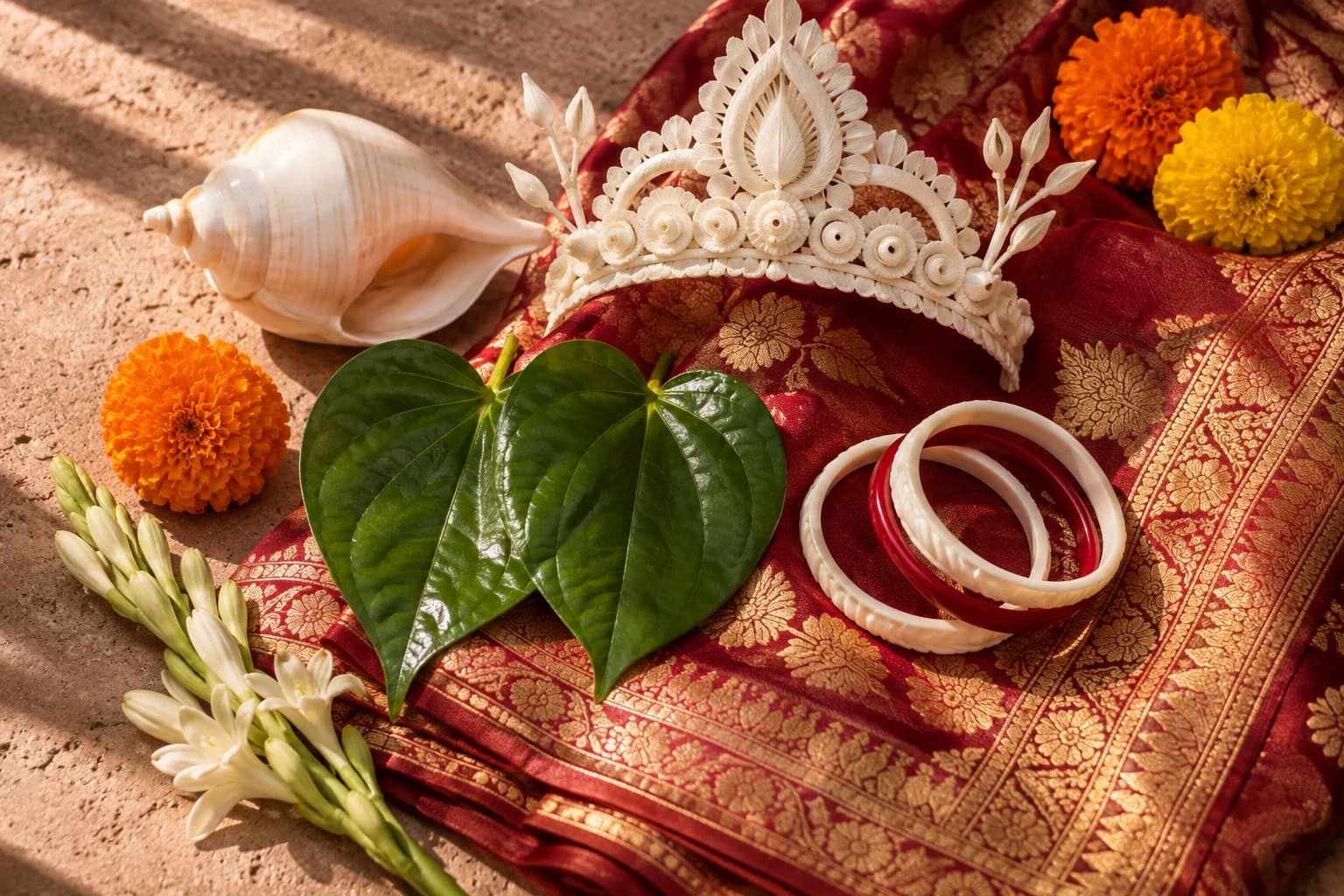
All through the seven rounds, the bride hides her face behind two heart-shaped paan leaves. Families say it is so that no one’s nazar, the evil eye, falls on her before the right moment, and so that the first look, when it comes, is the groom’s. Betel leaves are auspicious in many Hindu rituals, in Bengal and well beyond it.
Shubho drishti: the auspicious first look
When the seven rounds are done, the bride lowers the leaves and the couple look at each other. Shubho means auspicious and drishti means sight, so this is the auspicious first look. The women of the family blow conch shells and fill the hall with ulu, the rolling ululation of a Bengali celebration, and there is usually a lot of blushing.
Saat chakkar ka intezaar. Ek nazar ka jawab. Seven rounds of waiting, one look as the answer.
Mala badal, and what follows
Then comes mala badal, the exchange of garlands, often with the bride still raised on the piri. The order of saat paak, shubho drishti and mala badal varies a little from family to family. After them come sampradan, the giving of the bride, the yagna around the fire and, at the end, sindoor daan.
The groom wears a tall white topor and the bride a white mukut, both made of shola, the soft pith of a marsh plant. They are as much a part of the picture as the leaves themselves.
Varmala ceremony meaning: garland exchanges across India
Shubho drishti on your invitation
Shubho drishti happens at the lagna, so put the lagna on your invitation, and the full window if it is late at night. Guests who want to see the first look will plan to be there for it, and others may come only for dinner, so say when dinner starts too. If the bou bhaat is hosted by the groom’s family, give it its own line.
Bengali wedding invitation: writing your biyer card
Quick answers
- What is shubho drishti? The auspicious first look between the bride and groom at a Bengali wedding, when the bride lowers the betel leaves from her face.
- Why does the Bengali bride hide behind betel leaves? Families say it keeps the evil eye away until the first look.
- What is saat paak? The bride, seated on a piri, is carried round the groom seven times by her brothers. It is different from the saptapadi.
- Is it shubho drishti or subho drishti? Both. They are two spellings of the same Bengali words, শুভদৃষ্টি.
Written by Inviteeq Editorial, with care for every celebration.