Kashi yatra: why a South Indian groom walks out of his own wedding
Why does a South Indian groom set off for Kashi on his wedding morning? The umbrella, fan and staff, the student life it acts out, who stops him, and what follows.
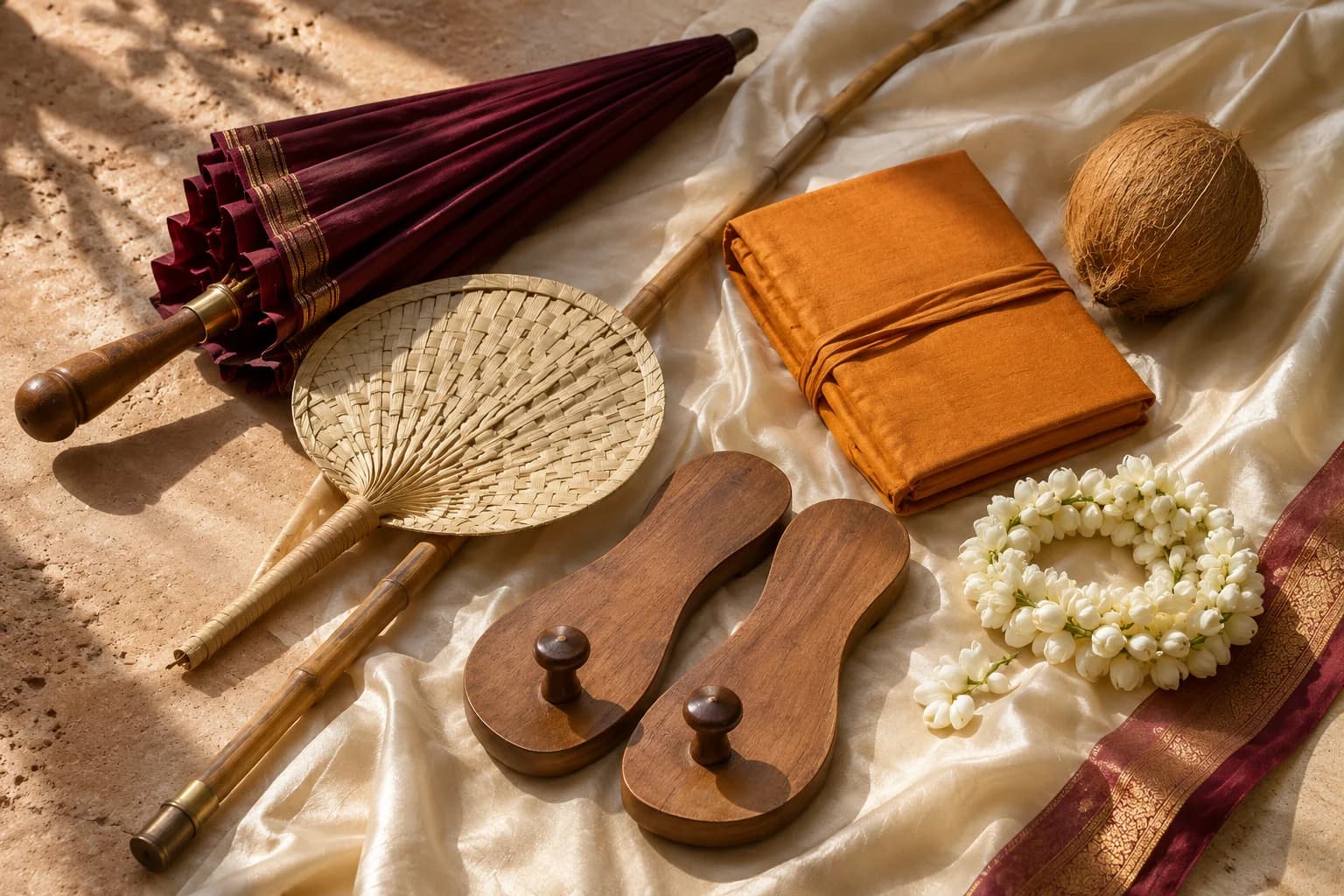
On the morning of his wedding, in his best veshti, a South Indian groom picks up an umbrella, a fan and a walking stick, slips on his sandals and announces that he is not getting married after all. He is off to Kashi. Then the bride’s father runs after him. The Kashi yatra is the closest a wedding comes to a comedy sketch, and its roots go back to the old household manuals.
What is the Kashi yatra?
The Kashi yatra, the pilgrimage to Kashi, is a mock departure on the wedding morning, before the muhurtham. It is best known from Tamil Brahmin weddings, and is part of many other South Indian Brahmin weddings too. The groom sets off with everything a traveller and a scholar would need: an umbrella, a hand fan, a walking stick, sandals and a holy book.
Shaadi nahi, main Kashi jaa raha hoon! No wedding, I’m off to Kashi!
The end of student life
The walk acts out a choice a young man once faced at the end of his studies. Having finished his years as a student, a brahmachari, he could go on to a life of learning and renunciation, for which Kashi stood, or he could marry and become a householder. The old household manuals describe the graduating student receiving a parasol, shoes and a bamboo staff, which is where the groom’s props come from.
Who stops him
Before he gets far, the bride’s father, or sometimes her brother, stops him. He asks the groom to give up the road to Kashi and choose family life instead, and offers his daughter as his companion on that journey. The groom, of course, agrees, usually to cheers and a good deal of teasing from both families.
Kashi bas bahaana tha. Asli yatra toh ab shuru hoti hai. Kashi was just an excuse. The real journey starts now.
What follows: the garlands and the oonjal
Back at the mandapam, the couple exchange garlands in the maalai maatral, often perched on the shoulders of uncles and cousins. Then they sit together on the oonjal, a swing, while the women of the family sing to them. Kanyadaanam and the tying of the thali come after, at the muhurtham.
Kanyadaan meaning: the promise behind the ritual
The Kashi yatra on your invitation
The Kashi yatra is part of the wedding morning, so it rarely gets its own line. Give the muhurtham window exactly, and if guests will want to see the Kashi yatra and the oonjal, tell them what time to arrive for those, which is often well before the muhurtham. When guests travel for an early muhurtham, they usually arrive the night before, so the reception the evening before deserves its own line too.
South Indian wedding invitation, from nichayathartham to muhurtham
Quick answers
- Why does the groom go on a Kashi yatra? It acts out the choice at the end of student life, between learning and renunciation, for which Kashi stood, and family life.
- What does the groom carry on the Kashi yatra? An umbrella, a hand fan, a walking stick, sandals and a holy book.
- Who stops the groom? The bride’s father, or sometimes her brother, who persuades him to marry instead.
- When is the Kashi yatra? On the wedding morning, before the garland exchange, the oonjal and the muhurtham.
Written by Inviteeq Editorial, with care for every celebration.